
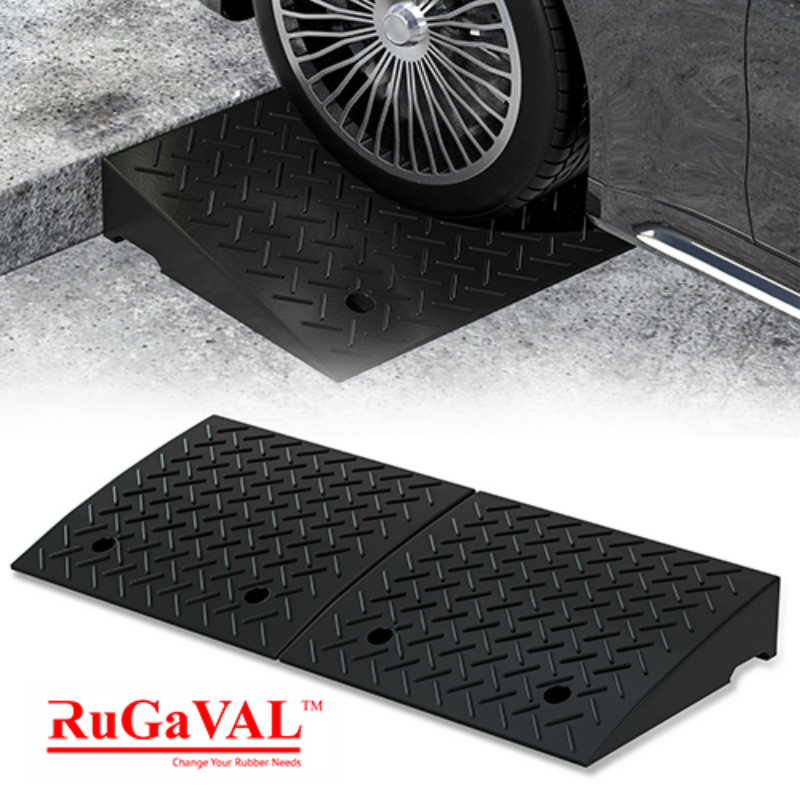
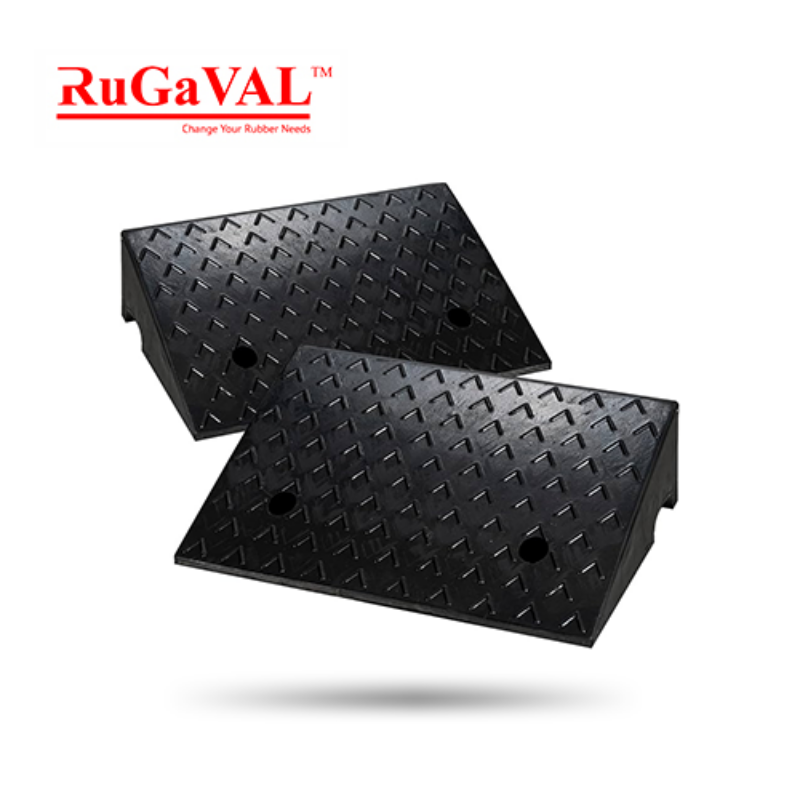
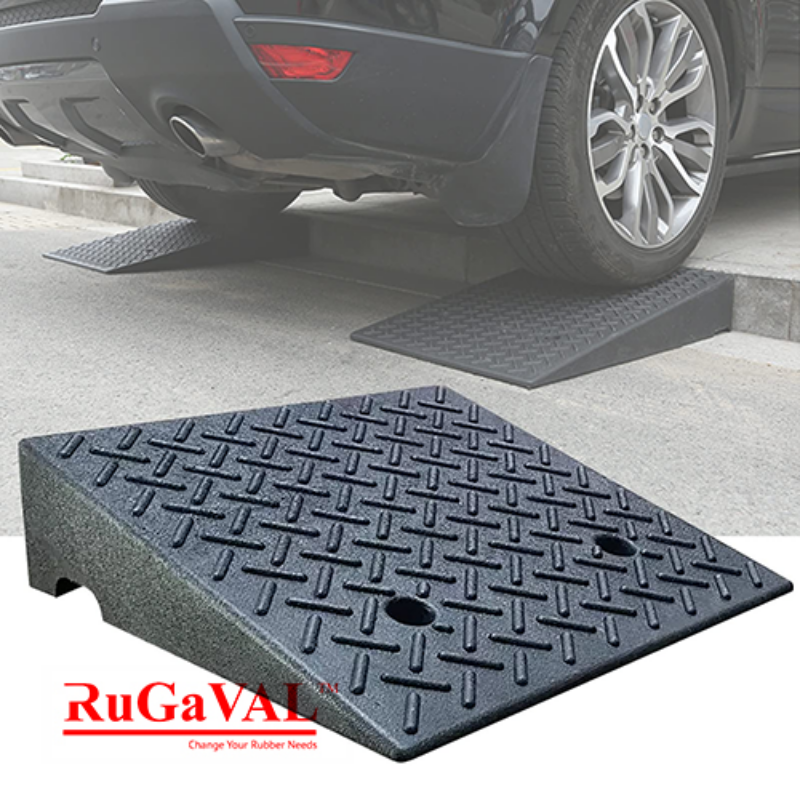
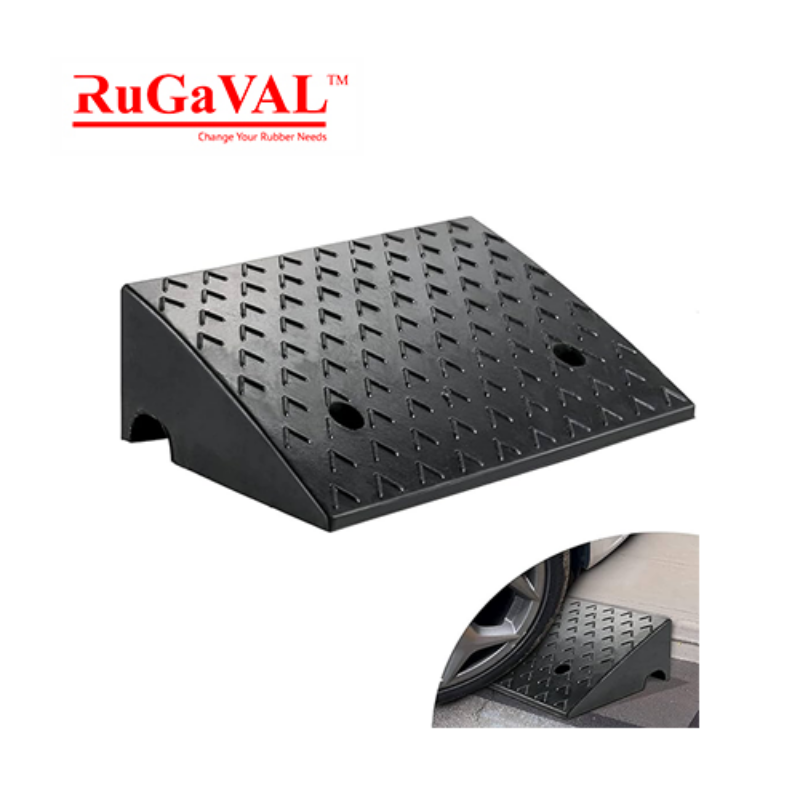
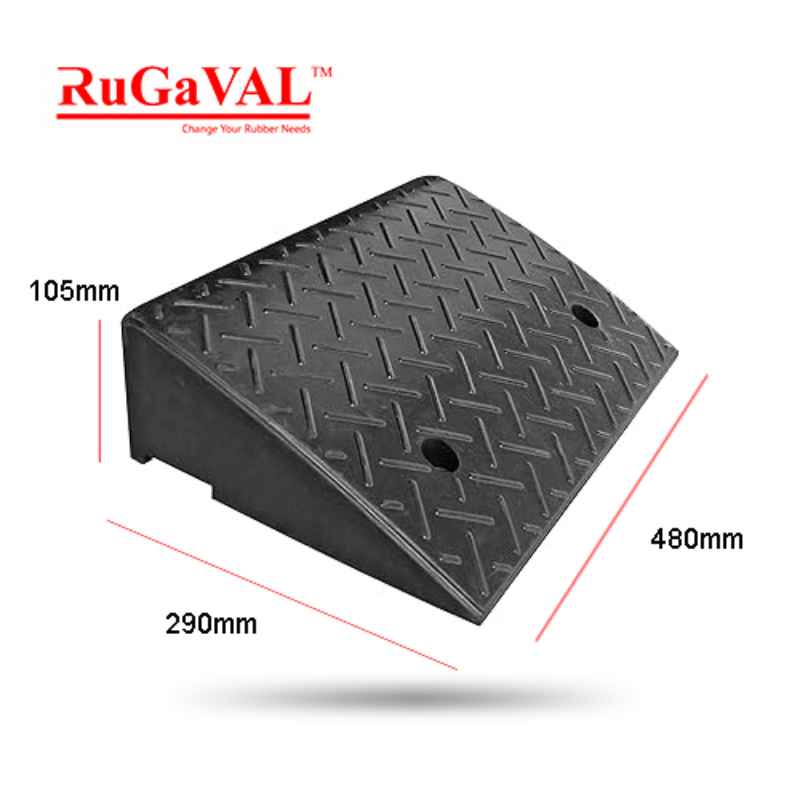
Product Description
heavy duty curb ramp | rubber threshold ramp | rubber car ramp | portable curb ramp | curb bridge ramp
Rubber Curb Ramp – Technical Specifications & Engineering Data
Rubber curb ramps are engineered using advanced elastomer technology and structural load distribution principles to ensure high-performance operation under static and dynamic loading conditions. Below is a comprehensive technical breakdown covering material composition, mechanical properties, structural design, and performance standards.
1. Material Composition & Compound Formulation
Primary Rubber Types
SBR (Styrene-Butadiene Rubber)
- High abrasion resistance
- Good tensile strength
- Cost-efficient for heavy-duty applications
EPDM (Ethylene Propylene Diene Monomer)
- Superior UV and ozone resistance
- Excellent weathering performance
- Stable in extreme temperatures
NR (Natural Rubber – Optional Blend)
- High elasticity
- Excellent resilience and rebound properties
Compound Additives
- Carbon black (reinforcement & UV resistance)
- Anti-oxidants (aging resistance)
- Processing oils (flexibility enhancement)
- Sulfur curing agents (cross-linking strength)
Typical Material Composition Ratio
| Component | Percentage |
|---|---|
| Base Rubber (SBR/EPDM/NR) | 50–70% |
| Carbon Black | 20–30% |
| Additives & Fillers | 10–20% |
2. Mechanical & Physical Properties
Standard Material Properties
| Property | Value Range | Test Standard |
|---|---|---|
| Hardness | 65–85 Shore A | ASTM D2240 |
| Tensile Strength | 8–18 MPa | ASTM D412 |
| Elongation at Break | 200–400% | ASTM D412 |
| Compression Set | ≤ 25% | ASTM D395 |
| Tear Strength | 20–50 kN/m | ASTM D624 |
| Abrasion Resistance | High | DIN 53516 |
| Density | 1.1–1.4 g/cm³ | ASTM D792 |
Thermal & Environmental Performance
| Property | Value |
|---|---|
| Operating Temperature | -40°C to +120°C |
| UV Resistance | Excellent (EPDM-based) |
| Ozone Resistance | High |
| Water Absorption | < 2% |
| Chemical Resistance | Oil, grease, mild acids |
3. Structural Engineering Design
Load Distribution System
Rubber curb ramps utilize:
- Elastic deformation under load
- Uniform pressure dispersion
- Wide base contact surface
Result:
- Reduced point load stress
- Increased ground stability
- Protection against surface cracking
Internal Structure Types
Solid Core Design
- Maximum load-bearing strength
- No internal voids
- Suitable for heavy-duty industrial use
Honeycomb / Hollow Core Design
- Reduced weight
- Integrated drainage channels
- Moderate load capacity
Base Friction Design
- High-friction underside surface
- Anti-slip ribbing
- Optional rubber grip pads
4. Load Capacity & Performance Ratings
Static Load Capacity
| Ramp Type | Load Capacity |
|---|---|
| Light Duty | 2–5 tons |
| Medium Duty | 5–10 tons |
| Heavy Duty | 10–15 tons |
| Ultra Heavy Duty | 20+ tons |
Dynamic Load Performance
- Designed for repeated vehicle impact cycles
- Fatigue-resistant under continuous traffic
- Minimal permanent deformation after load release
Impact Resistance
- High energy absorption coefficient
- Reduced rebound shock
- Protects vehicle suspension components
5. Dimensional Specifications
Standard Sizes
| Height | Width | Length |
|---|---|---|
| 50 mm | 300–500 mm | Modular |
| 75 mm | 400–600 mm | Modular |
| 100 mm | 500–800 mm | Modular |
| 150 mm+ | Custom | Custom |
Tolerance Levels
- Height tolerance: ±2 mm
- Width tolerance: ±3 mm
- Surface flatness: ±1.5 mm
6. Surface Engineering
Anti-Slip Coefficient
- Coefficient of friction: ≥ 0.6 (dry)
- ≥ 0.8 (wet conditions with textured surface)
Surface Patterns
- Diamond tread
- Linear grooves
- Ribbed traction design
Wear Resistance
- High abrasion resistance for long-term use
- Suitable for heavy traffic environments
7. Drainage & Water Flow Engineering
Drainage System Types
- Open channel design
- Closed internal water pathways
- Multi-channel flow systems
Flow Capacity
- Designed to handle moderate rainfall runoff
- Prevents hydrostatic pressure buildup
8. Installation & Fixing System
Mounting Specifications
- Pre-drilled holes: Ø10–16 mm
- Anchor bolt compatibility: M8–M12
Installation Surface Compatibility
- Concrete
- Asphalt
- Interlocking pavement
Fixing Methods
- Mechanical anchoring
- Adhesive bonding (optional)
- Free-lay (non-fixed applications)
9. Compliance & Standards
Rubber curb ramps may comply with:
- ASTM material standards
- ISO quality management systems
- RoHS (environmental compliance)
- REACH (chemical safety)
10. Quality Control & Testing
Factory Testing Includes:
- Load-bearing test
- Compression deformation test
- Slip resistance test
- Weathering simulation
- Dimensional inspection
11. Lifecycle Performance
Expected Lifespan
- 5–10 years under normal conditions
- Longer under controlled environments
Degradation Resistance
- UV stabilization prevents cracking
- Anti-oxidation additives extend life
- Resistant to mechanical wear
12. Custom Engineering Capabilities
Manufacturers can provide:
- Custom load ratings
- Tailored slope angles
- Reinforced steel core options
- Fire-retardant rubber compounds
- Anti-static rubber (ESD applications)
Technical Summary
Rubber curb ramps are engineered systems combining:
- Advanced elastomer materials
- Precision structural design
- High-load performance capability
- Safety-focused surface engineering
They deliver reliable performance across residential, commercial, and industrial applications, ensuring vehicle protection, safety compliance, and operational efficiency.
Contact Details
heavy duty curb ramp | rubber threshold ramp | rubber car ramp | portable curb ramp | curb bridge ramp
| Supplier | : | Rugaval Rubber Sdn Bhd |
| : | rugavalrubber@gmail.com | |
| Phone | : | 60351918961 |
| Fax | : | 60351915961 |
| Location | : | Selangor, Malaysia |
Enquiry Box
Other Products
 Loading...Please Wait.